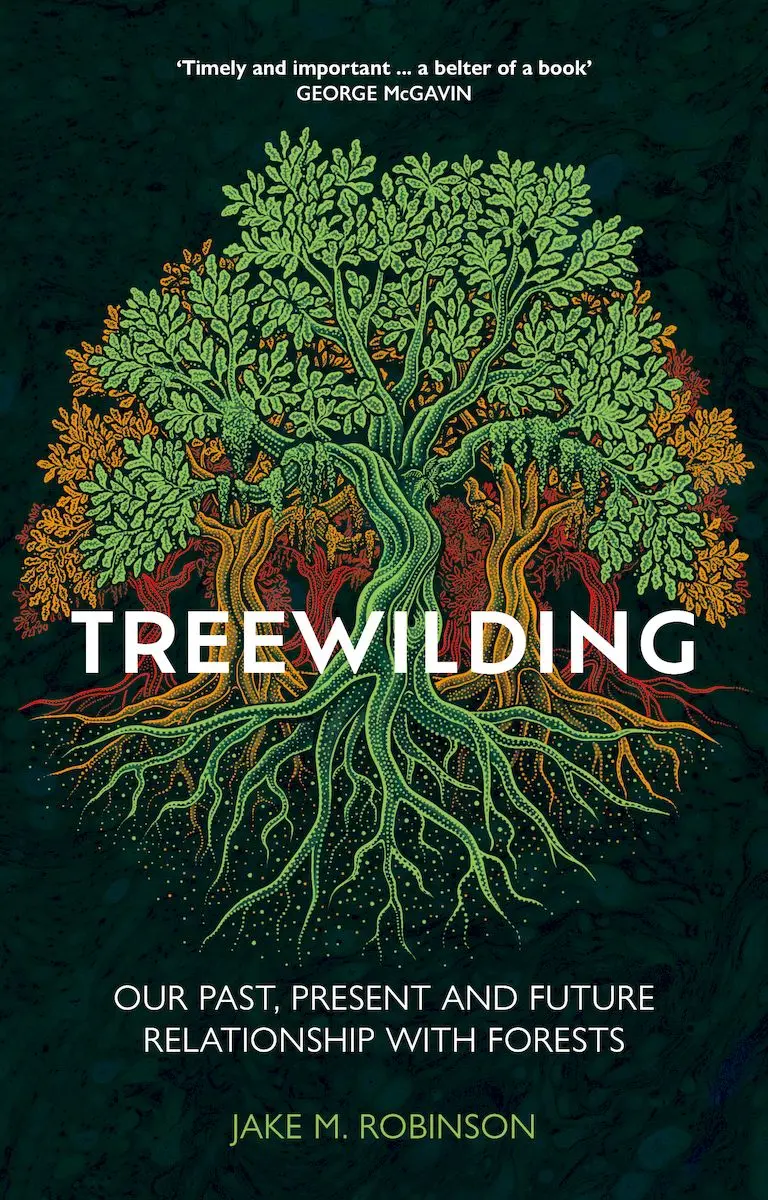
As we clear millions of hectares of forests globally, the challenge of restoring these precious ecosystems becomes ever more pressing.
This original, topical and engaging book navigates the intricate web of forest restoration. It reveals how a nuanced approach is required – one that integrates the latest scientific advancements (for instance in microbial ecology, acoustic technology and epigenetics), Indigenous leadership and a holistic understanding of the interconnectedness of life within these vital ecosystems.
Treewilding asks us to reflect on our relationship with trees and how we must see the woods (complex social and ecological systems) for the wood (timber) – a realisation that is perhaps the biggest ‘secret’ to restoring nature.
Table of Contents
Introduction: Seeing the Woods for the Wood
PART I. TREES: THEY RISE, THEY FALL, THEY MATTER
1. A Brief History of Forests
2. A Brief History of Deforestation
3. The Social Importance of Trees
4. The Ecological Importance of Trees
PART II. RESTORE, REWILD, REGENERATE
5. Forest Restoration
6. Natural Regeneration
7. Chernobyl’s Red Forest
8. Agroforestry
9. The Miyawaki Method
PART III. FOREST RESTORATION: A CONTROVERSIAL BUSINESS
10. The Trillion Trees Controversy
11. Greenwashing Galore
12. Sea of Tree Guards
PART IV. UNSEEN AND UNDER-APPRECIATED PERSPECTIVES
13. Trees and their Invisible ‘Friends’
14. Senses and Memory
15. Dark Emu: An Indigenous Perspective
16. Restoring Forests in a Changing Climate
17. Future Forests and Tomorrow’s Guardians
Conclusion: Let Trees Be Thy Teachers
Afterthoughts: Insights from Environmental Psychology
Notes
Bibliography
Index